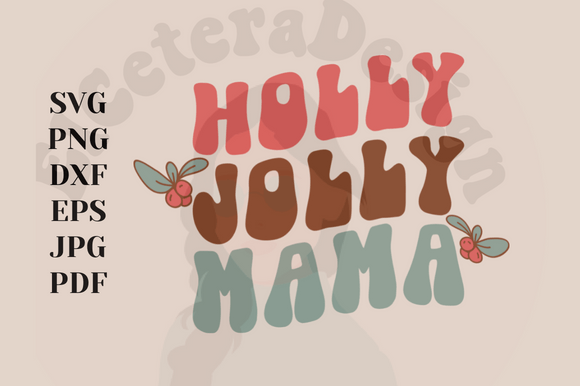
Holly Jolly Mama Retro Christmas Design Review
As someone who has spent years stitching out designs for everything from boutique hats to nursery wall art, I have learned that the difference between a good project and a great one often comes down to the design itself. When Holly Jolly Mama Retro Christmas Design landed on my desk, it wasn't just another festive file; it felt like a specific mood waiting to be stitched. The retro aesthetic immediately signals a warm, nostalgic vibe that cuts through the clutter of modern, hyper-realistic embroidery patterns. It is an Illustrations category piece that feels perfectly at home in a handmade shop or a personal craft room.
The first thing I noticed about this design is its personality. It doesn't try to be overly complex or technically showy. Instead, it leans into a charming, vintage feel that resonates with customers who value authenticity over perfection. For a designer looking to create a cohesive brand identity, this piece offers a distinct visual language. Whether you are preparing a custom embroidered tote bag or designing a holiday gift set, the layout suggests a balanced composition that works well without overwhelming the fabric. It creates a sense of joy and comfort that is exactly what people look for during the holiday season.
Real-World Application: From Digital File to Finished Product
I recently decided to test Holly Jolly Mama Retro Christmas Design on a practical project: a line of personalized kitchen towels for a local holiday market. The goal was to create items that looked professional but retained that cozy, handmade charm. My initial concern was whether the retro style would translate well onto cotton terrycloth, which can sometimes swallow up fine details. After hooping the fabric with a proper cut-away stabilizer, the result was surprisingly crisp.
The design's strength lies in how it handles different stitch types. The use of satin stitch for the outlines gives the text a polished, raised look that catches the light nicely on the towel. Meanwhile, the fill stitch areas provide enough texture to make the image pop without feeling too heavy. This balance is crucial for products like aprons or tea towels where the fabric needs to remain somewhat pliable. If the design were too dense, it might stiffen the material, making it less functional for cooking. Fortunately, this file respects the integrity of the fabric.
Imagine taking this same design and applying it to a sweatshirt. The retro theme pairs beautifully with heather gray or deep burgundy fabrics. It transforms a standard garment into a statement piece that feels curated rather than mass-produced. For an Etsy seller, this versatility is gold. You could offer the design as a tote bag design, a sweatshirt embroidery option, or even as a holiday embroidery accent on baby onesies. The adaptability allows a small business owner to maximize their inventory without needing to purchase entirely new assets for every product line.
Navigating Technical Challenges and Fabric Choices
While Holly Jolly Mama Retro Christmas Design is versatile, no single design is perfect for every situation. As an experienced reviewer, I need to point out where caution is required. One area to watch is the stitch density. While generally well-balanced, if you attempt to stitch this on a very thin, stretchy fabric like a lightweight jersey t-shirt without adequate stabilization, you risk puckering. The retro style relies on clean lines, and any distortion from a shifting fabric will ruin the intended aesthetic.
Another consideration is the hoop size. If you plan to place this on a cap or a small patch, ensure your machine can handle the dimensions comfortably. Curved surfaces like caps present a unique challenge; while the design looks great flat, the curvature can sometimes compress the stitches, making small details harder to distinguish. I recommend testing the design on a scrap piece of the actual fabric first. This step is non-negotiable for anyone selling finished goods. You want to verify that the thread colors contrast sufficiently against the background. On dark fabrics, lighter threads might get lost, whereas on white fabrics, the design might appear too stark depending on the color palette chosen.
For those working with textured fabrics, such as fleece or heavy wool, the smaller details in the illustration might not register clearly. In these cases, simplifying the design or adjusting the thread tension might be necessary. However, for smooth materials like denim, canvas, or standard cotton blends, this design shines. It also holds up well when used as a digital embroidery file for creating printable mockups. The clarity of the shapes ensures that customers can visualize the final product accurately before they commit to buying.
Impact on Brand Perception and Customer Trust
In the world of handmade commerce, visual appeal directly correlates to perceived value. A well-executed embroidery project builds trust. When a customer sees that the Holly Jolly Mama Retro Christmas Design has been stitched with precision, they assume the entire product was made with care. This is especially true for personalized gifts and commercial embroidery projects where the client expects a high standard.
The retro theme also adds a layer of emotional connection. It evokes memories of past holidays, which makes the item more than just a decoration; it becomes a keepsake. For a small shop product, this emotional resonance can be the deciding factor in a sale. Customers are more likely to share a photo of a cute, well-stitched design on social media, effectively marketing your brand for free. The design's unique personality helps your brand stand out in a crowded marketplace filled with generic clipart.
However, consistency is key. If you mix this retro style with overly modern, neon-bright designs, it can confuse your brand identity. Stick to a cohesive color story and style guide. Whether you are creating apparel decorators for a boutique or crafting baby embroidery sets, maintaining a consistent look across all products reinforces professionalism.
Practical Notes for the Embroidery Designer
Before you hit the start button on your machine, there are several technical steps to ensure success. First, always review the stitch density settings in your software. If the design appears too crowded, consider reducing the fill percentage slightly to prevent thread breakage. Second, check the thread colors provided in the file. Sometimes, the default palette might not match your fabric choice, so don't be afraid to swap out colors to achieve better contrast.
Testing in black and white mockups is another excellent strategy. This helps you see if the design's shape holds up without relying on color to define it. If the silhouette is weak, the design might struggle on certain backgrounds. Additionally, confirm whether the license allows for commercial embroidery if you plan to sell the finished items. Many designers overlook this until after production begins.
Finally, remember that the best results come from using the right stabilizer. For machine embroidery design work, a tear-away or cut-away stabilizer appropriate for the fabric weight is essential. Don't skimp on this step. A poorly stabilized project can lead to frustration and wasted time, regardless of how beautiful the embroidery file is.
In conclusion, Holly Jolly Mama Retro Christmas Design is a solid addition to any designer's library. Its retro charm, combined with practical stitch structures, makes it suitable for a wide range of handmade products. Whether you are a seasoned Etsy seller or a hobbyist looking to create a special gift, this design offers a reliable foundation for your next creative endeavor. Just remember to test, stabilize, and choose your fabrics wisely to bring out the full potential of this festive masterpiece.